Baked Custard Doneness Checklist: 7 Signs Your Custard Is Ready to Pull
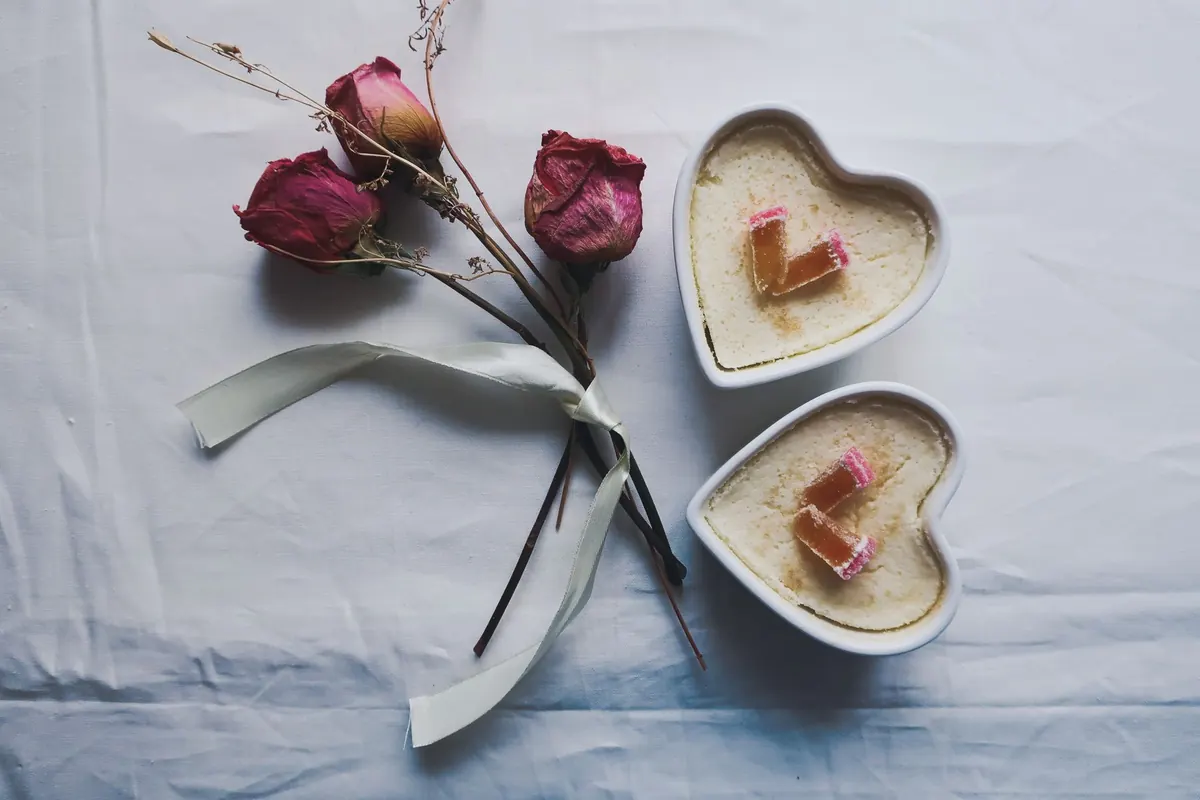
Baked custard does not announce itself. There is no golden crust to watch, no bubbling edge to listen for, just a quiet dish of eggs, milk, and sugar sitting in its water bath, looking nearly identical at minute 35 as it did at minute 25. Then, somewhere in the next few minutes, it crosses from liquid to set, and the timer has no idea it happened.
You cannot bake custard to a clock. You bake it to a wobble, a look, and a temperature. What follows is the sequence of checks to run as the baking time approaches, so the custard ends up on the table instead of in the sink.
Why the Window Is Narrow
Egg proteins firm up across a small temperature range. Below it, you have sweet milk. Inside it, you have silk. Above it, those proteins tighten, squeeze out the water they were holding, and you get graininess and a puddle around the edge. The water bath is what buys you time: it keeps the custard's outer edge from racing ahead of its middle, so the whole dish sets within a few degrees of itself.
One more thing to keep in mind: custard keeps cooking after it leaves the oven. A ceramic ramekin holds plenty of heat, and the center will climb another several degrees while the dish rests. That is exactly why you pull it while the middle still looks slightly underdone. It is not underdone. It is finishing.
The Seven Signs Your Custard Is Ready
Read these as a group. Any one of them on its own can mislead you, but three or four together are reliable.
- The center wobbles as one piece. Set the ramekin on the rack and nudge it gently. A finished custard moves like firm gelatin: the whole surface shifts together in a soft, even quiver. If you see ripples traveling across the top like liquid in a bowl, it needs more time. If it does not move at all, it has already gone too far.
- A ring about an inch wide at the edge looks set and matte. Custard sets from the outside in. That outer band should look dry and slightly dull, with just a hint of give when you press it with a fingertip. The middle will still look wetter than the edge. That contrast is the target.
- A thin knife comes out nearly clean an inch from the edge. Slide a paring knife in about an inch in from the side, hold it for three seconds, and pull it out. A little soft custard clinging to the blade is fine. A blade coated in liquid means more oven time. If the slit you made fills immediately with watery liquid, you have crossed into overbaked.
- The surface is glossy but not wet. A shine is normal and desirable. A slick, mirror-like puddle in the center is not. This cue is easy to misread on its own, since a custard can look dry on top while still being liquid underneath, so pair it with the wobble test.
- The center reads 170 to 175°F (77 to 79°C). This is your backstop, and the most objective signal you have. Below roughly 165°F the middle is likely still loose; above about 185°F the proteins have tightened enough that texture is at risk. Anything past 160°F is safely cooked, so you are working in a comfortable margin.
- The edges have not pulled away and there are no bubbles or cracks. Shrinkage from the sides of the dish and a ring of small bubbles are the classic "one step too far" markers. They tend to appear together, and they mean the custard is already past its best texture.
- The smell is faint and sweet, not eggy. Lean over the open oven. A strong cooked-egg smell usually means the edges have gone past set. It is a soft cue, but once you notice it, you will notice it every time.
Temperature Is the Tiebreaker
If you own an instant-read thermometer, use it, but use it last. Check the center of the dish, angling the probe down from the edge so the tip sits in the middle of the custard rather than against the bottom of the ramekin, which will read hotter than the custard itself. Wipe the probe between checks so you are not cooling the spot you just measured.
Shape changes the number slightly. A shallow gratin dish sets faster and reads more evenly than a tall, narrow ramekin, and a large single custard will always trail a set of small ones. Treat the range as a guide and let the wobble have the final word. If the thermometer says 172°F and the center still sloshes in waves, give it a few more minutes and check again.
What to Do the Moment You Pull It
- Leave the dish in the water bath, on the rack, for 10 to 15 minutes. The residual heat finishes the center gently instead of letting the cooler air do it abruptly.
- Lift the custard out, set it on a cooling rack, and let it come to room temperature. Do not plunge it into the refrigerator while it is hot.
- Cover loosely and refrigerate. A slightly loose center will firm up considerably overnight, which is one reason custards taste better the next day.
- Serve it cold, or warm from a short rest if you like the softer texture. Both are correct.
If the Signs Say You Missed
An overbaked custard shows itself with graininess, a ring of water in the dish, or a curdled, spongy texture. Do not put it back in the oven, and do not try to re-bake it into smoothness. Instead, press it through a fine sieve and use it as a sauce over berries or slices of pound cake, or blend it briefly and fold it into whipped cream. A little water around the edge can simply be blotted away if the custard beneath is still tender.
An underset custard is the easier problem. Chill it for at least four hours, ideally overnight. If the center is still soup after that, return the dish to a fresh water bath in a 325°F oven and check every 5 to 10 minutes. The edges are already set, so keep a close eye on it, but a second pass often rescues a custard that was pulled five minutes early.
The Checklist at a Glance
Pull the custard when the center wobbles as one piece, the outer inch looks set and matte, a knife an inch from the edge comes out nearly clean, and the middle reads near 170°F. Rest it in the bath, cool it on a rack, and chill it before you judge the final texture.
Your first attempt may land slightly soft or slightly firm. Note what you saw and adjust: if it was grainy, drop your oven temperature by 25°F next time and start checking five minutes earlier. Two or three custards in, you will stop needing the timer at all.
Photo: Asya Vlasova / Pexels