Flan, Crème Caramel, and Crème Brûlée: What's the Difference?
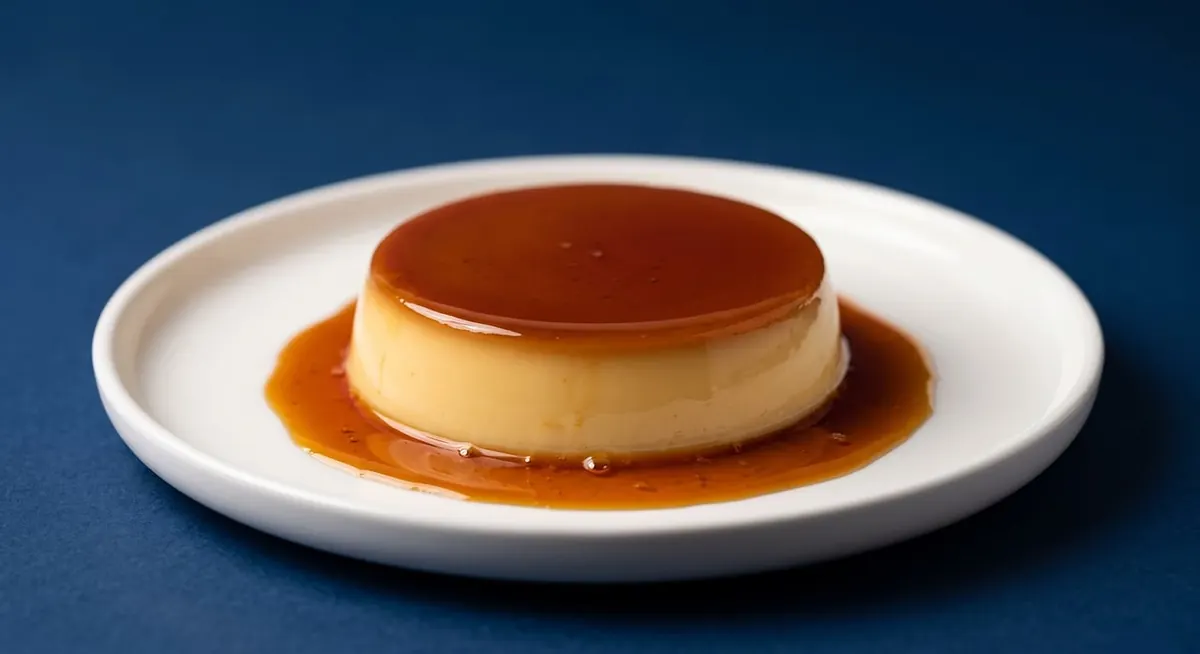
Put a flan, a crème caramel, and a crème brûlée on the same table and most people will assume they came from the same recipe. They nearly did. Two of them are the same dessert carrying different names, and the third takes the same custard and the same caramel in a completely different direction. The difference shows up in the first spoonful: one is a soft, trembling custard standing in its own sauce, the other a cold, dense cream under a sheet of glass.
The mix-up is understandable. All three are custards built from eggs, milk or cream, sugar, and a gentle bake in a water bath. All three are served cold. And all three depend on caramel for their signature — but in one family of recipes that caramel is buried under the custard and inverted onto the plate, and in the other it is fired on top and shattered with a spoon.
The Short Answer: Two of These Are Nearly Twins
Crème caramel is a baked egg custard set in a mold that was lined with liquid caramel before the custard went in. Once it's chilled and turned out, the caramel — which hardened against the mold — has softened into a thin amber syrup that coats the custard and pools on the plate. That's the whole idea, and it's also exactly what flan means in Spain, Mexico, Argentina, and most of the Spanish-speaking world.
The two words describe the same technique with regional accents. A Spanish flan de huevo leans on whole eggs and milk, often scented with lemon peel, cinnamon, or a split vanilla bean. A Mexican flan frequently uses sweetened condensed milk and evaporated milk, which makes it sweeter, denser, and more likely to slice cleanly. Both are unmolded. Both are served cold. Both come with sauce. The mold matters more than most recipes admit: a metal mold releases more cleanly than ceramic, and a thin film of caramel left in the corners becomes the syrup that runs down the sides.
Crème brûlée skips the unmolding entirely. Its caramel is made at the last minute, on the surface of the custard, and never becomes a sauce at all.
What Makes Crème Brûlée Different
The custard is baked and chilled in the dish it's served in, traditionally a shallow ramekin, because a thin layer gives you more surface for sugar and a better ratio of crackly top to cool cream. Just before it goes to the table, a spoonful of sugar is dusted over the surface and melted under a torch or a hot broiler until it fuses into a thin sheet of caramel. Tap it with the back of a spoon and it shatters.
That crust has a short life. Sugar pulls moisture from the air and from the custard beneath it, so a brûlée is at its best within minutes of being torched, and by the half-hour mark the glass has begun to soften into syrup. This is why restaurants assemble them to order, and why a brûlée that arrives already cracked and weeping was almost certainly torched well in advance.
A crème brûlée is judged at the tap, not the taste. Anyone can make custard; the crust has to answer back.
The Three, Side by Side
- Crème caramel: caramel cooked on the stovetop and poured into the mold first; custard baked on top of it; unmolded; sauce ends up under and around the custard.
- Flan: the same construction as crème caramel, with regional variations in dairy, sweetener, and flavoring that push it from delicate to dense.
- Crème brûlée: no caramel in the mold; custard baked and served in its ramekin; sugar caramelized on the surface right before serving; crust is hard, sauce never forms.
Texture Follows the Recipe
Whole eggs versus yolks
Crème caramel and most flans use whole eggs, sometimes with extra yolks. Egg whites set firmly, which is what allows the custard to hold its shape when it's inverted onto a plate. Use enough and you get a flan you can cut into wedges; use too few and it slumps into a puddle the moment you unmold it.
Crème brûlée is usually yolks only, and often a lot of them relative to the liquid. Yolks set softly and carry fat, so the finished custard is richer and looser — barely holding together on the spoon, closer to a thick pouring cream than a sliceable dessert. If your brûlée cuts cleanly, it's likely overcooked or built like a flan.
Milk, cream, and heat
Flan and crème caramel generally start with milk or a milk-and-cream blend, which keeps them light enough to eat in quantity. Crème brûlée is cream almost by definition, sometimes loosened with a little milk so it doesn't turn buttery.
Both get baked gently in a water bath. The hot water buffers the heat so the custard sets at the edges without curdling in the middle, and it's the reason these desserts come out silky rather than spongy. An oven thermometer helps more than a timer here, since most home ovens run hot and a custard that climbs past roughly 180°F (82°C) will start to weep. Pull it while the center still wobbles and let the residual heat finish the job.
One Word, Several Desserts
If the technical difference is simple, the vocabulary is not. Flan travels well and changes meaning at every border:
- In Spain and Latin America, it's the unmolded caramel custard described above, sometimes called flan de huevo or flan napolitano.
- In France, flan usually means flan pâtissier, a flat pastry tart filled with set custard — nothing like the Spanish dessert.
- In Britain, a "flan" is often a sponge case filled with fruit and glaze, no custard involved at all.
- In the Philippines, leche flan is the same dessert made with condensed milk and a heavier hand of egg yolks.
- In Vietnam, bánh flan is served with coffee and crushed ice; in Japan, purin arrives in a small cup with caramel pooled at the bottom.
Crème brûlée is the more stable term, though it has cousins of its own — Catalan crema catalana is set on the stovetop rather than baked, and flavored with lemon and cinnamon, but it wears the same burnt-sugar lid.
Where Things Usually Go Wrong
- Curdled custard: too much heat, applied too fast. Use the water bath, keep the oven low, and pull the dish early.
- A flan that won't release: the mold wasn't coated evenly, or the custard stuck because it was overbaked. A quick dip of the mold in warm water loosens it.
- Bitter caramel: sugar taken past a deep amber. Pull it at the color of weak tea; it keeps darkening in the hot mold.
- A soggy brûlée top: torched too soon, or sugar applied too thickly so the layer beneath the surface never hardens.
- A custard that tastes aggressively of egg: usually a sign of overcooking rather than a flawed recipe. Vanilla, citrus zest, and a pinch of salt all help.
Which One to Make
If you want a dessert that can be made a day ahead, turned out with a flourish, and sliced for a crowd, make flan or crème caramel. If you want something rich enough that a small portion is plenty, and you're willing to finish each plate with a torch seconds before serving, make crème brûlée.
The happy news is that the base is the same skill. Once you can bake a custard gently enough that it sets without curdling, you can make all three — and the only real decision left is whether the caramel goes underneath or on top.
Photo: tehzeebhud / Pixabay