The History of Crème Brûlée: From Catalan Cream to French Classic
A spoon cracks through a thin sheet of amber sugar and sinks into cold, soft custard. That single motion — brittle to silky in a heartbeat — explains why crème brûlée has survived four centuries of kitchen fashion. Where it came from, though, is a fight nobody has settled. France, Catalonia and England all claim it, and all three have old cookbooks to back them up. The paper trail is genuinely murky, and it is more interesting than the tidy origin story. Here is what the records show, and what it means for the version in your kitchen.
Sugar Had to Get Cheap First
Burnt cream depends on one ingredient that was once a luxury: refined white sugar. Honey was the older sweetener, and honey does not melt into a glassy sheet — it burns bitter. Hard, dry, refined sugar melts into a clear caramel that hardens into a pane you can crack with the back of a spoon.
That is a product of trade. As cane sugar from the Atlantic islands and later the Caribbean reached European ports in quantity through the sixteenth and seventeenth centuries, a burnt-sugar lid became possible for kitchens well beyond the very wealthy. Early burnt creams were banquet dishes. Showing off sugar was the point.
It is worth pausing on how strange the technique once looked. A medieval cook had no blowtorch, no grill, and no thermostat — only a hearth, an iron and a guess. Burning sugar deliberately, without ruining it, was a small act of skill that separated a trained kitchen from a household one. The dish was never peasant food. It was a demonstration.
Catalonia's Claim: Crema Catalana
Catalan cooks point to crema catalana — also called crema cremada, burnt cream — as the ancestor, and their case is older than the French one. Catalan recipe collections from the fourteenth century onward include sweetened, thickened creams, and by the sixteenth century cooks were writing down versions close to what is served in Barcelona today.
The details are what distinguish the dish: milk rather than cream, thickened with starch, scented with lemon zest and cinnamon, cooked on the stovetop rather than baked, poured into a wide clay dish called a cazuela, chilled, then dusted with sugar and burnt under a hot iron. The starch gives a lighter, slightly quivering set. That citrus-and-cinnamon perfume is the giveaway in a blind tasting.
In Catalonia it is eaten on March 19, the feast of Saint Joseph, and it appears on nearly every restaurant menu in the region. That everyday familiarity is part of the argument: a dish this embedded in local custom, Catalans say, was not imported from Paris.
France Supplies the Name
The phrase itself is French. François Massialot, a cook who worked in aristocratic households, published Le Cuisinier royal et bourgeois in 1691, and among its recipes is one headed crème brûlée. It is the earliest printed use of the name anyone has found.
Massialot's version was a rich custard flavored with orange flower water or cinnamon, sugared on top and finished with a pelle à feu — a fire shovel heated in the hearth and held over the surface. That tool is the direct ancestor of the blowtorch. Note the shape of his dish, too: the cream was often set in one large vessel and portioned at the table, not baked as neat individual pots. In seventeenth-century French, brûlée simply meant burnt, and it could describe any cream with a scorched sugar lid.
England's Burnt Cream, and Trinity College
English cooks were doing the same thing at the same time. Manuscript recipe books from the seventeenth century record "burnt cream" — cream, eggs and sugar baked until just set, then sugared and scorched with a hot iron.
The dish is bound up with Trinity College, Cambridge, where it is said to have been served since the 1600s and where it survives as Trinity cream, sometimes with the college crest branded into the sugar. Whether the college kitchens got there first or copied a printed book is unprovable, and it does not change much. By the late seventeenth century, cooks in England, France and Catalonia were all burning sugar on top of set cream with the same basic tool.
Two Custards, One Word
Today the argument is less about origin than about naming. In many Spanish-speaking countries the two terms are used interchangeably, and restaurant menus rarely help. They are close relatives, but they are not the same dessert:
- Setting agent: crème brûlée sets with egg yolks alone; crema catalana is thickened with starch.
- Cooking method: the French version is baked in a water bath; the Catalan version is stirred over direct heat on the stovetop.
- Flavoring: vanilla is the French default; lemon zest and cinnamon mark the Catalan one.
- Vessel: shallow individual ramekins for brûlée, a wide clay cazuela for catalana.
- Texture: brûlée is dense and rich; catalana is lighter, with a faint jelly wobble.
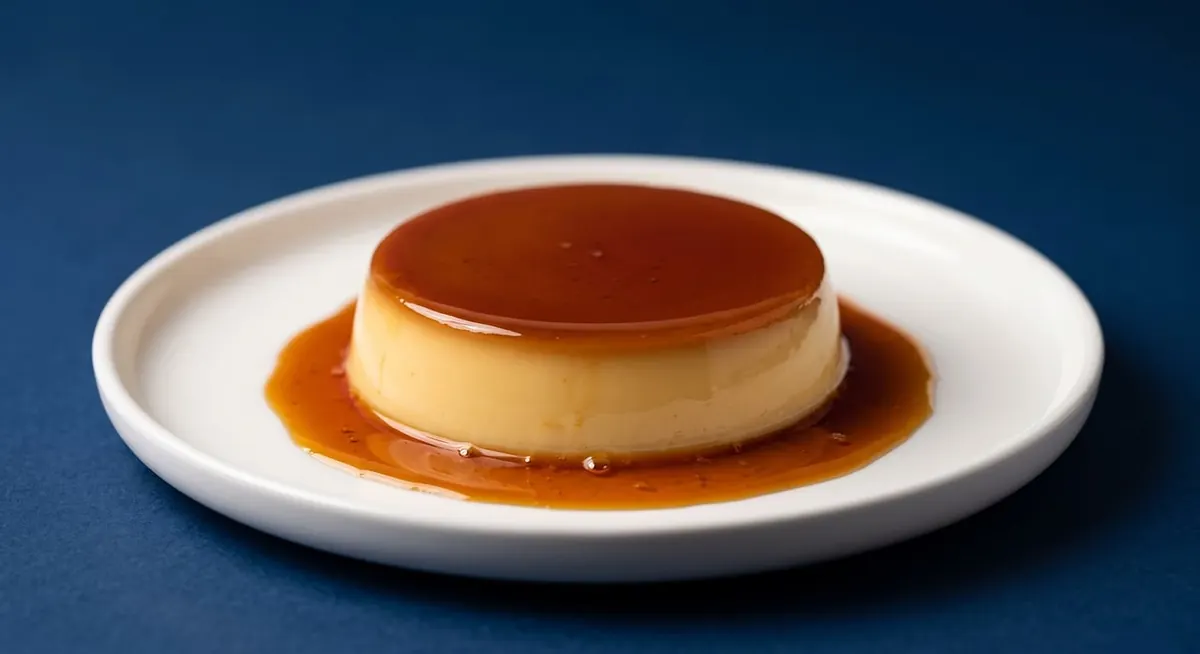
And do not confuse either with crème caramel, the flan-like dessert baked with caramel in the mold and turned out onto a plate. Same family, opposite construction: the caramel goes underneath, and it becomes a sauce instead of a crust.
The Torch Made It a Menu Staple
For most of its life, crème brûlée was a restaurant trick performed with a hot iron or a salamander grill. The hand-held kitchen torch, cheap and reliable by the 1980s, changed the arithmetic. Now any line cook could caramelize a dozen ramekins in under a minute, in front of the guest, with a satisfying hiss.
The timing could not have been better. The dessert arrived on Western menus just as the ideal of the theatrical, individually plated finale was taking hold, and its contrast — hot glass over cold cream — was impossible to fake. By the 1990s it had become shorthand for a certain kind of bistro menu, and it has never really left.
The Physics of a Perfect Crack
A good brûlée is a study in contrast, and it lives or dies on temperature. The sugar layer should be thin enough to shatter, not chew, and the custard beneath must stay cold — which means chilling the ramekins thoroughly before the sugar goes anywhere near them.
A crust that shatters but a custard that stays cold: that is the whole trick, and everything else is decoration.
Sprinkle a thin, even film of sugar, not a mound. Torch it in slow circles until it bubbles and turns amber, then let it rest a minute so the caramel hardens. Do not caramelize it twice. A second pass makes the layer thick and toffee-like, and a thick lid turns a delicate crack into a wrestling match.
Three Faults to Avoid at Home
- Overbaked custard. Pull the ramekins when the centers still wobble like set gelatin — they firm up as they cool, and a few extra minutes turn silk into scrambled egg.
- Under-whisked eggs. Whisk the yolks and sugar until pale and slightly thickened before the hot cream goes in, or you will see streaks of cooked egg in the finished custard.
- Sugar applied too early. Caramel softens in the fridge within hours. Sugar the top at the last possible moment, ideally just before serving.
Use a water bath, keep the oven low, and trust texture over the clock. Every oven runs differently, and the recipe that works in yours is the one you calibrate yourself.
So Who Owns It?
Nobody, really. A burnt cream appears in three countries within a century not because of theft but because the conditions were identical: cheap sugar, eggs, dairy, and a fire hot enough to scorch a surface. Good ideas travel that way, and they change shape as they land.
What survives is the crack — the one second of noise that tells you everything about a dessert's construction, from the brittleness of the caramel to the coldness of the cream beneath. Catalonia, France and England can keep arguing about the paperwork. The spoon settles it.
Photo: Pexels / Pixabay