Why Custard Curdles: 6 Common Mistakes and How to Fix Them
Custard punishes a two-second lapse. Look away from the pan and a glossy crème anglaise turns grainy, then split. But curdling is rarely bad luck. It comes down to heat, acid, egg ratio, and how you move the whisk — all of which you control.
Here is the mechanism underneath. Egg proteins sit in the liquid as coiled strands. Heat, acid, and agitation make them unwind and link into a delicate web that traps water and thickens everything around it. Push past that point and the web contracts, squeezing water out. That squeeze is curdling. Stay on the near side of the line and custard stays silky; the sections below show where the line sits.
Overheating Is the Usual Suspect
Most curdled custard is simply overcooked. Egg yolks begin to set around 180°F (82°C), and they turn from setting to scrambling not long after. Whole-egg mixtures are more fragile still, because whites coagulate at a lower temperature than yolks. Sugar and starch both raise the temperature at which this happens, which is exactly why pastry cream forgives more than crème anglaise.
The gap between thickened and broken is narrow, and it closes fast. Once the pan is genuinely hot, the mixture can travel from 175°F to 190°F in under a minute. That is why the last thirty seconds of cooking matter more than the first five minutes.
Signals that you are seconds away
- Steady steam rising from the surface, with no bubbles yet.
- The first lazy bubble at the edge of the pan.
- The mixture coats a spatula thickly enough that a finger drawn through the film leaves a clean line.
- A thermometer reads 170–175°F (77–79°C).
At that point, take it off the heat. Residual heat will finish the job.
Acid Lowers the Curdling Threshold
Lemon juice, vinegar, wine, and fruit purées all make egg proteins set at a lower temperature. That is not automatically a problem — lemon curd is built on the idea, and it sets firm because of the acid. Trouble comes when acid meets a delicate custard. A squeeze of lemon into a warm crème anglaise can split it in seconds, and it will look like overheating even though the temperature never climbed.
Add acid late and off the heat, whisking it into an already thickened, slightly cooled base. If a recipe calls for wine or citrus in quantity, temper it in gradually rather than pouring it in at once. The same logic applies to fruit: a tart raspberry purée folded into a still-warm pastry cream will thin and grain it, while the identical purée stirred into a cooled base behaves perfectly.
Egg Ratios Set Your Margin for Error
When a custard looks thin, the temptation is to keep cooking — the exact move that curdles it. Thin mixtures with little egg or fat have almost no margin. Rich ones are far more forgiving. Useful starting points:
- Crème anglaise or ice cream base: 4 to 6 yolks per 2 cups (480 ml) of dairy.
- Pastry cream: 4 yolks plus about 2 tablespoons of cornstarch per 2 cups of milk; the starch shields the proteins.
- Baked custard: roughly 1 whole egg per 1/2 cup (120 ml) of milk, or yolks only for a denser set.
- Crème brûlée: 4 to 6 yolks per 2 cups of cream, with enough sugar to help.
Two rules follow. Don't cut the sugar — it raises the coagulation temperature and buys you time. And don't swap yolks for whole eggs in a recipe that already works.
Stirring Mistakes: Too Slow, Then Too Fast
A custard left to sit in a hot pan develops hot spots. The thin film of egg touching the bottom is the hottest part of the mixture, and it will set and then scramble while everything above it is still liquid. When you finally stir, those set flecks break loose and seed curdling through the whole batch. The lump at the bottom of the pan is not a separate problem — it is the beginning of the split.
Stirring too hard is its own kind of damage. A furious whisk whips air into the mixture, which turns a smooth custard foamy, and it shoves proteins into each other hard enough to encourage them to link up in the first place. The goal is constant, gentle, unhurried motion: enough to keep the entire mixture at one temperature, not enough to build a foam.
What good stirring looks like
- Keep the tool in contact with the bottom of the pan, sweeping the corners where heat concentrates.
- Use a silicone spatula for anything with starch, and a whisk for thin, yolk-only mixtures.
- Aim for a steady rhythm — fast enough that nothing sits still, slow enough that you are not whipping in air.
- Never walk away. A custard that is perfect at one minute is grainy at two.
Tempering Is the Step People Rush
Tempering — dribbling a little hot liquid into the yolks while whisking, then returning the warmed yolks to the pan — exists for one reason: to raise the egg temperature slowly so the proteins never see a shock. Pour the hot milk in all at once and the first splash cooks the yolks into visible flecks. Those flecks are already curdled custard, and no amount of stirring afterward will dissolve them.
Two details make tempering reliable. Whisk the yolks with the sugar first, until they lighten and thicken slightly; the sugar coats the proteins and raises the heat at which they set. Then add the hot liquid in a thin, steady stream, whisking constantly, and only when the bowl feels warm to the touch pour everything back into the pan.
Hot Spots, Thin Pans, and Cooking by the Clock
Custard is a low-and-slow job, and a thin, dark-bottomed pan is built for the opposite. Cheap aluminum saucepans and wide shallow skillets concentrate heat in rings and spots, so part of the custard is close to boiling while the rest is barely warm. Use a heavy saucepan with a light-colored interior, and if you are nervous, set a bowl over a pot of simmering water and cook it there instead.
The other half of this mistake is trusting time over evidence. Recipes say "cook for 6 to 8 minutes," but your pan, your stove, and the temperature of your ingredients decide the real number. Cook to the signal — the coat on the spatula, the first wisp of steam, the reading on the thermometer — and treat the clock as a rough guide only.
Every curdled custard was, a few seconds earlier, a perfect one. The fix is always the same: slow down, lower the heat, and keep the whisk moving.
How to Rescue a Curdled Custard
All is not lost. Act immediately and most splits can be saved, or at least repurposed into something you would happily serve.
- Get it off the heat and into an ice bath. Set the pan in a bowl of ice water and keep whisking. Stopping the cooking right away is the single most effective rescue there is.
- Strain it. A fine-mesh sieve catches small curds and leaves a smooth sauce behind. For pastry cream and anglaise, straining is worth doing even when nothing has gone wrong.
- Blend it. A brief pass with an immersion blender or a stand blender on low speed breaks up fine grain and pulls the mixture back together. Keep it short — over-blending turns custard gluey.
- Restart it. Whisk a fresh yolk with a spoonful of sugar in a clean bowl, then slowly whisk the strained custard into it. The fresh yolk re-emulsifies the base.
- Rehome it. A custard too far gone still makes an excellent ice cream base, bread pudding, or sauce for fruit. Strain it, chill it, and use it within a couple of days.
The Prevention Checklist
- Whisk the yolks and sugar together until pale before any heat touches them.
- Warm the dairy gently, then temper it into the yolks in a thin stream.
- Cook over medium-low heat, stirring constantly and scraping the bottom.
- Watch the signals — steam, the coat on the spatula, 170–175°F — rather than the clock.
- Pull the pan off the heat the moment it thickens; residual heat finishes the work.
- Add acid, alcohol, and fruit off the heat, at the very end, and gradually.
- Strain into a clean bowl, then cool it fast over an ice bath.
None of this requires special equipment or a delicate touch. It requires attention at the end, when the custard is close enough to done that your instinct says to keep going. Stop there instead, and it will never curdle on you.
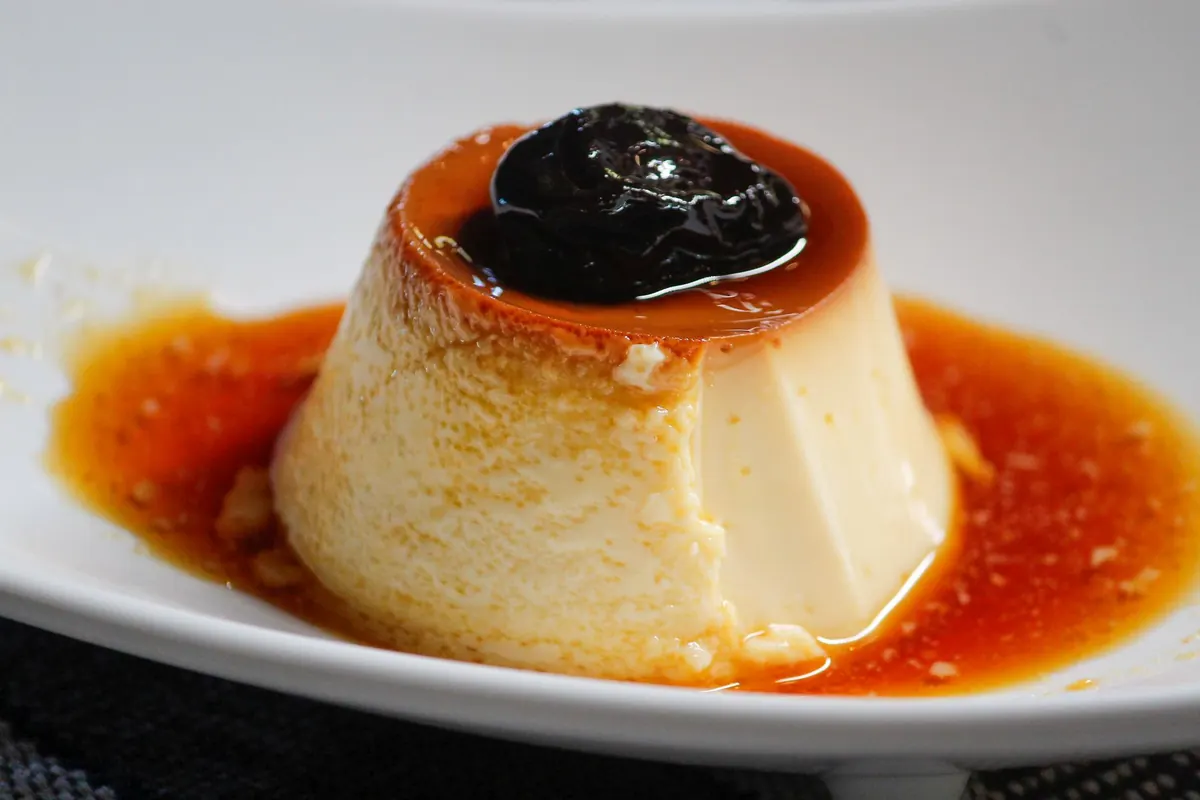
Photo: Caio Niceas / Pexels